
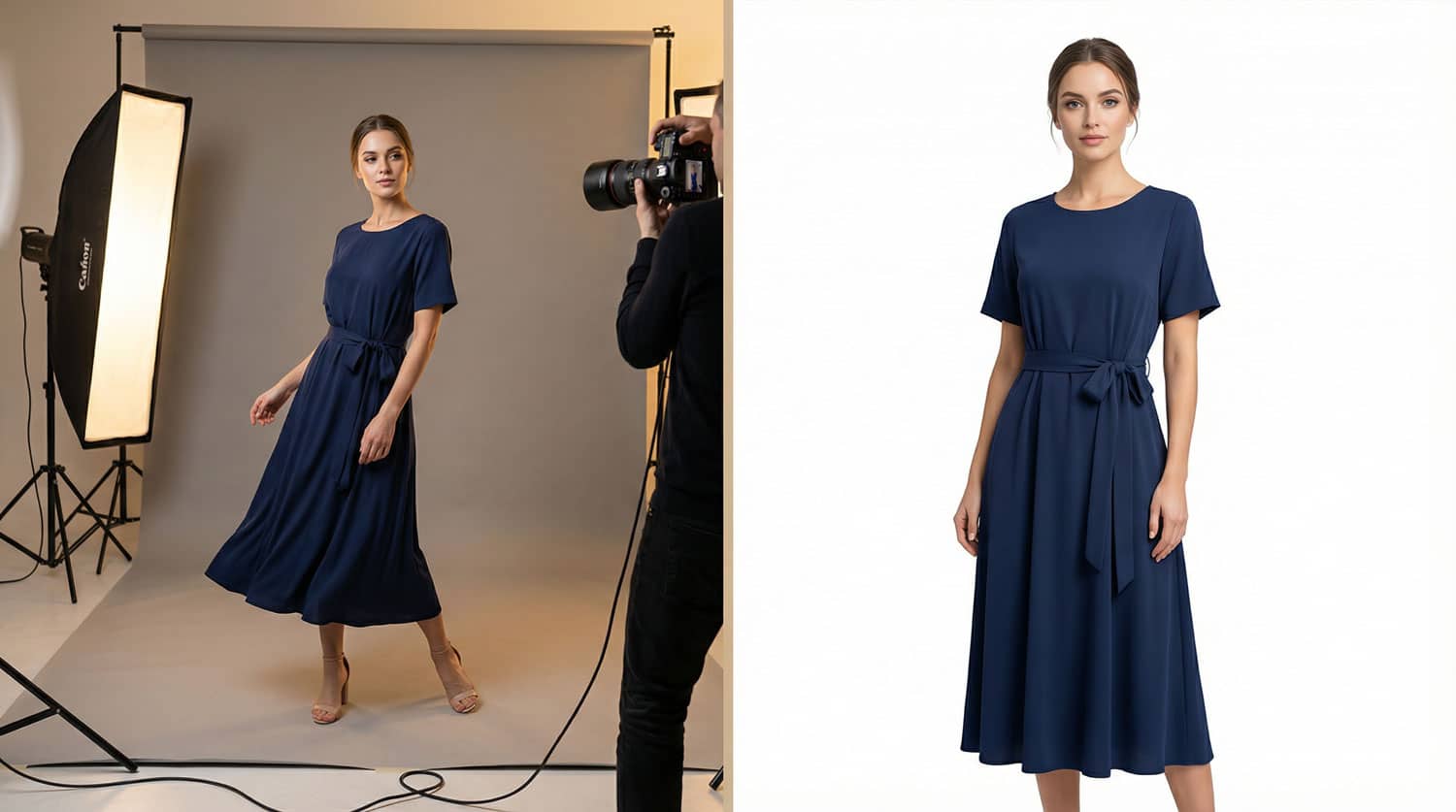
The UK fashion e-commerce landscape has fundamentally shifted. While traditional model photoshoots once cost £2,000-£10,000 per session and required weeks of coordination, AI fashion models UK studios provide now enable clothing brands to generate hundreds of professional on-model images in days—without booking a single model. For UK fashion brands navigating rising costs, model availability constraints, and the demand for diverse representation, AI model generation represents more than efficiency gains. It’s reshaping how emerging designers, established retailers, and Amazon sellers showcase their collections to increasingly visual-first consumers.
Why UK Fashion Brands Are Embracing AI Fashion Models
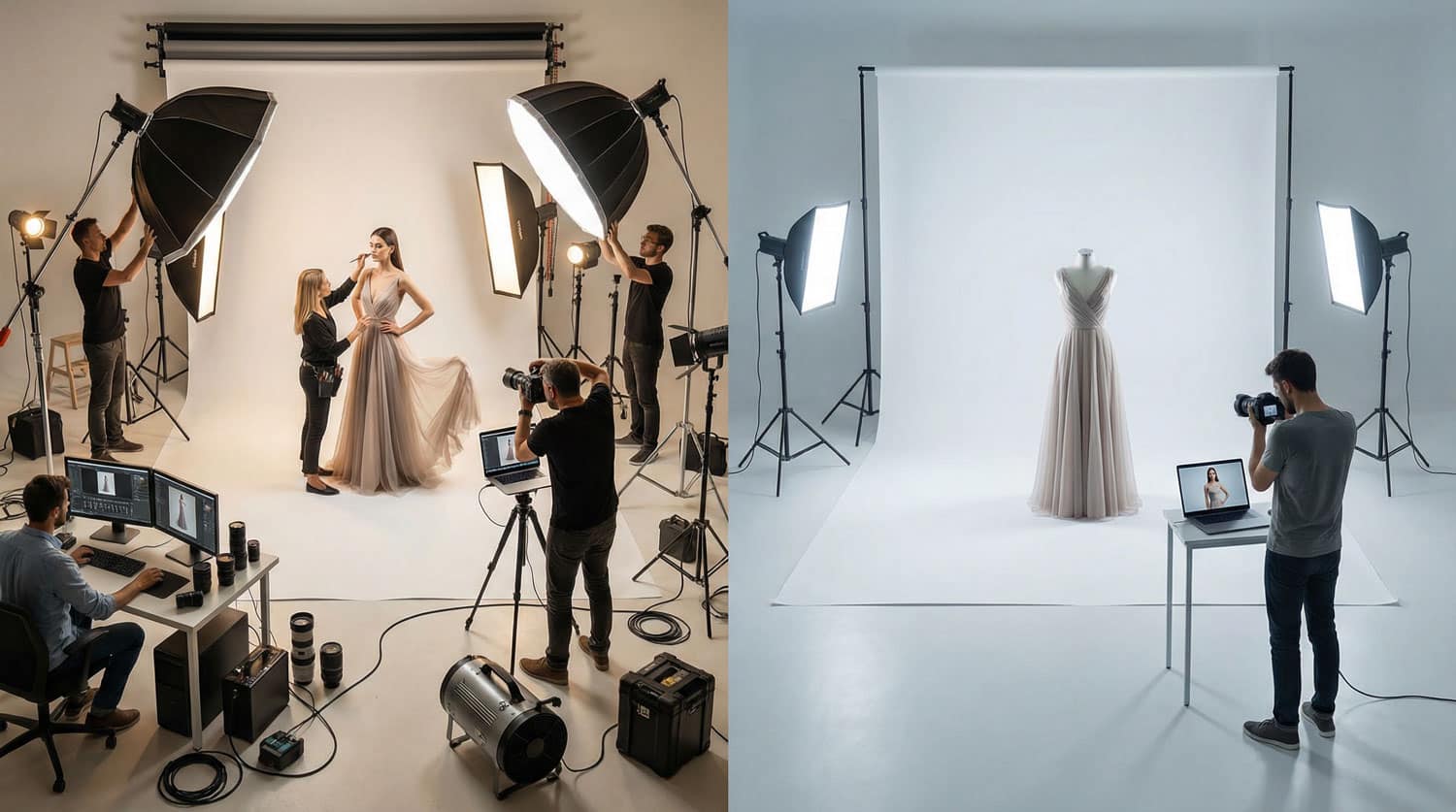
Traditional fashion photography, while producing excellent results, presents economic and logistical challenges that increasingly motivate UK clothing brands to explore AI solutions.
Rising Model Costs Without Proportional Returns
Professional fashion models in major UK markets command £200-£1,000 per day, with experienced commercial models in London reaching £800-£2,000 daily rates. For emerging brands photographing seasonal collections of 30-50 garments, model costs alone reach £3,000-£6,000 before factoring photographer fees, studio rental, styling, and post-production.
The economic challenge compounds when brands need diverse representation. Showcasing the same collection across different body types, ethnicities, and ages—essential for inclusive marketing—multiplies photoshoot expenses exponentially. A single product line requiring five model types translates to five separate photoshoots or complex scheduling compromises.
The AI Advantage: Perfect Consistency Across Collections
Traditional fashion photography naturally features variety—different models bring unique character to each shoot. The UK fashion market remains one of the most dynamic in the world, with the apparel sector projected to generate £85.85 billion in revenue by 2024. With 31% of the market now conducted online and British consumers among Europe’s most active digital shoppers, the quality of product imagery has never been more critical to success.
UK fashion retailers must compete not just locally but globally, where visual presentation can make or break a sale. This works beautifully for editorial content and brand storytelling. However, for e-commerce catalogues where brands want a cohesive, unified look across hundreds of products, AI offers something traditional photography cannot easily achieve: perfect visual consistency.
With AI fashion models, brands can showcase their entire seasonal collection on the same three to five signature model identities. Every product page, every category, every marketing channel features the same familiar faces in identical styling, lighting, and pose quality. This level of consistency traditionally required exclusive contracts with specific models and meticulous shoot planning—investments accessible only to major fashion houses.
The result builds powerful brand recognition. Customers browsing a fashion website develop familiarity with these signature faces, creating visual cohesion that strengthens perceived professionalism and helps products feel part of a carefully curated collection rather than random inventory listings.
Speed Advantages for Trend-Responsive Brands
Traditional fashion photoshoots require 2-3 weeks from booking to final images. While this timeline works perfectly for planned seasonal launches, it presents challenges for brands wanting to respond quickly to emerging trends or capitalize on viral fashion moments.
Fast-fashion and trend-responsive brands benefit significantly from AI’s compressed timelines. When social media identifies an emerging trend, brands can photograph samples, generate model imagery, and list products within 48-72 hours—capturing demand while competitors work through booking calendars. This agility represents genuine competitive advantage in trend-driven markets where timing often matters more than perfection.
What Are AI Fashion Models and How Do They Work?
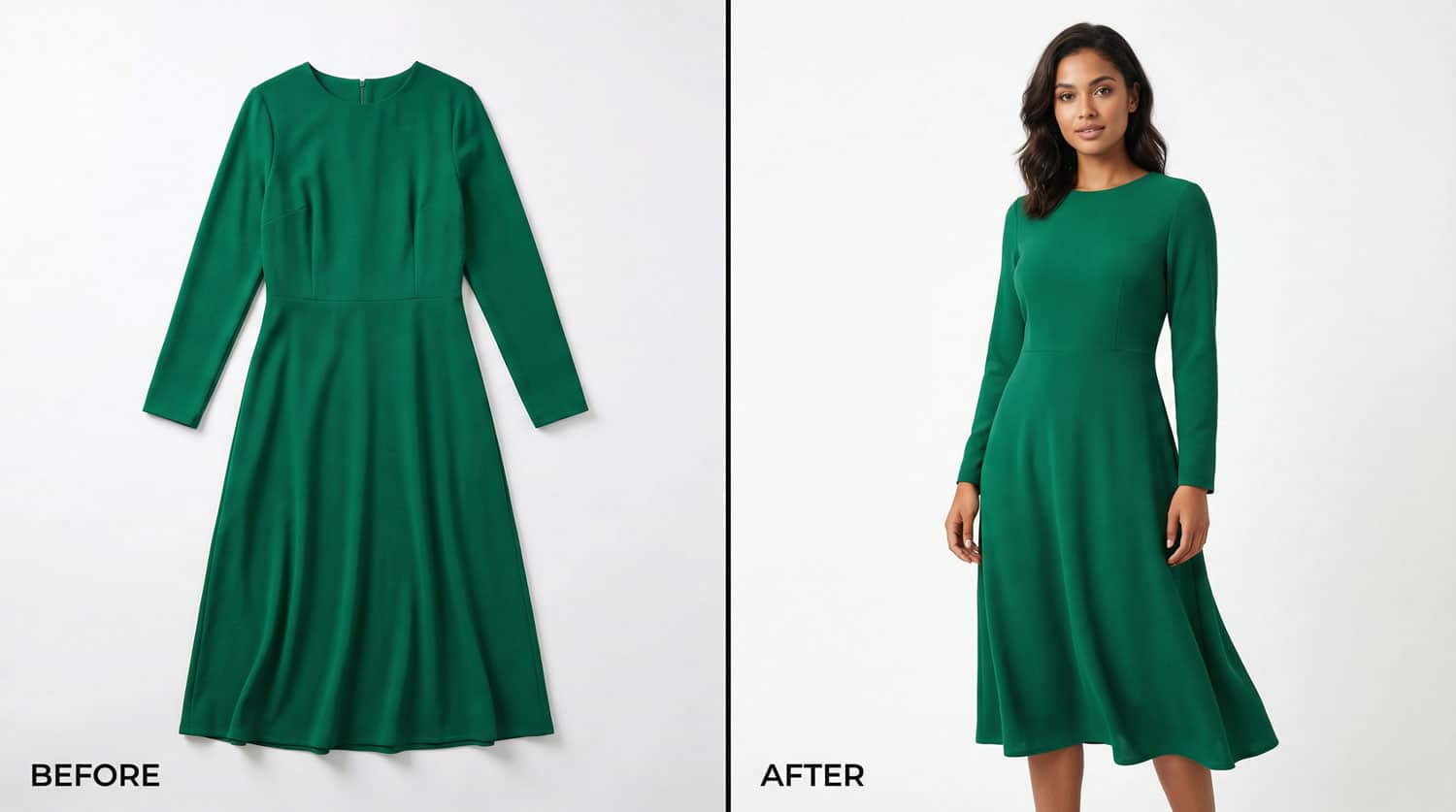
AI fashion models leverage advanced machine learning to place clothing items onto realistic virtual models, creating professional product imagery without physical photoshoots. The technology has matured significantly, now producing results indistinguishable from traditional photography for most e-commerce applications.
The fashion industry is experiencing a technological revolution, with AI rapidly transforming how brands create and market their products. According to McKinsey’s State of Fashion research, 73% of fashion executives have made generative AI a priority for their businesses in 2024, recognising its potential to revolutionise everything from design to customer experience. For UK clothing brands looking to stay competitive in this evolving landscape, AI-powered photography solutions offer a practical entry point into this transformation.
The Professional Photography Foundation
The critical distinction separating professional AI fashion services from consumer DIY tools lies in the photographic foundation. Professional services begin with proper product photography—controlled studio lighting, appropriate backgrounds, correct camera angles, and high-resolution capture that preserves fabric texture, colour accuracy, and garment details.
This photography-first approach produces dramatically superior AI-generated results because the source material provides the algorithm with genuine detail to work from. Amateur smartphone photos processed through free AI tools produce serviceable but noticeably synthetic results. Professional studio photography processed through commercial-grade AI creates imagery that rivals traditional model photography.
How AI Fashion Models Apply Garments Realistically
Modern AI fashion models systems employ sophisticated computer vision that understands fabric physics, body proportions, and photographic principles. The process involves several technical steps:
First, the AI analyses the garment photograph, identifying structural elements like sleeves, collars, hemlines, buttons, and fabric patterns. Advanced algorithms assess how the material drapes, stretches, or maintains structure based on visual cues about fabric weight and texture.
Second, the system generates or selects a base model matching specified characteristics—body type, ethnicity, age, pose, and expression. Professional AI services maintain libraries of diverse model types rather than relying on random generation, ensuring consistent quality and appropriate representation.
Third, the AI applies the garment to the model while simulating realistic fit, drape, and lighting interaction. This step requires understanding how fabric interacts with body contours, how shadows fall across textured surfaces, and how highlights reflect different materials. The most advanced systems preserve fine details like stitching, print patterns, and fabric weave that signal quality to discerning customers.
Finally, the generated image undergoes quality control and refinement. Professional services include manual review by experienced photographers who identify and correct artefact’s, ensure lighting consistency, and verify that the final image meets commercial standards.
Consistent Models: The Brand Cohesion Advantage
The transformative capability for fashion brands lies not just in generating individual images but in maintaining consistent model identities across entire collections. Rather than photographing 50 garments with random models, brands can showcase their complete seasonal line on the same three to five signature AI models.
For UK clothing brands, AI fashion models UK services deliver the brand cohesion that builds real recognition. Customers browsing a fashion website see the same familiar faces across categories, creating visual cohesion that professional brands achieve through expensive model contracts. The effect signals quality, establishes brand personality, and helps products feel part of a curated collection rather than disparate items.
Real Cost Comparison: Traditional vs AI Fashion Models
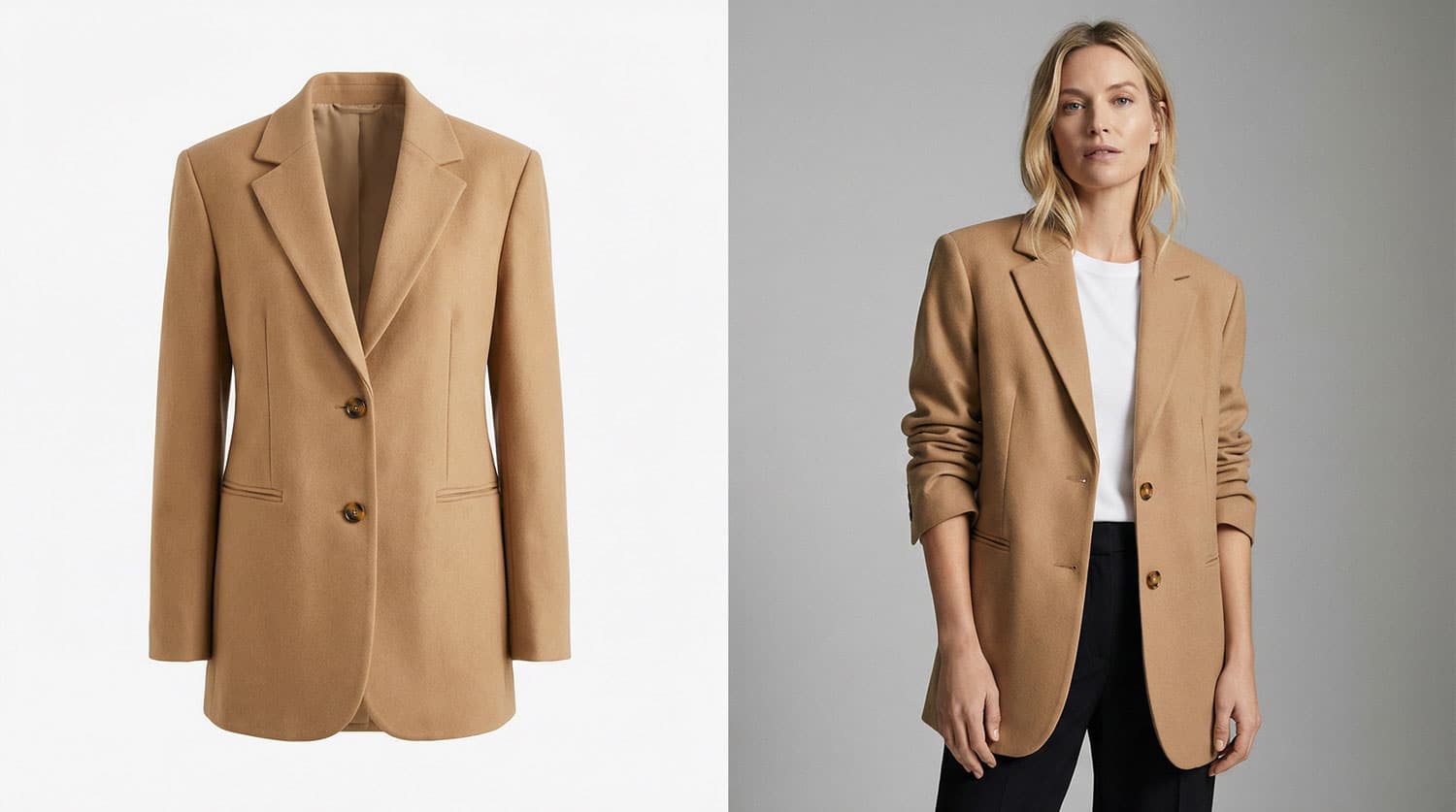 Understanding the true economics requires examining all costs, both obvious and hidden, across typical fashion brand photography needs.
Traditional Model Photography: Complete Cost Breakdown
A traditional photoshoot for 20 garments typically requires: Direct Costs:
- Professional photographer: £500-£2,000
- Model booking: £200-£1,000 per day
- Studio rental: £300-£800
- Styling and makeup: £200-£500
- Post-production editing: £300-£700
Total per session: £1,500-£5,000 For brands requiring diverse representation (multiple body types, ethnicities, ages), multiply these figures by the number of model categories needed. A brand photographing across three body types faces £4,500-£15,000 in photography costs alone.
Hidden Costs Rarely Factored
Traditional photography incurs substantial indirect costs: Time investment: Creative directors and brand managers spend 10-20 hours coordinating single photoshoots—scheduling conflicts, location logistics, sample shipping, and shot list preparation. For small brand teams, this represents £200-£600 in opportunity cost at £20-£30/hour valuations. Reshoots: Lighting issues, model availability problems, or styling mistakes require additional sessions costing £1,500-£3,000. Industry surveys suggest 30-40% of fashion photoshoots require some level of reshooting. Sample logistics: Shipping garment samples to locations, managing returns, and coordinating multiple samples for different model sizes adds £500-£1,000 per project in logistics and administrative burden. Market timing delays: The 2-3 week timeline from concept to final images means missing trend windows, delayed product launches, and inventory sitting unphotographed. For fast-fashion brands, these timing costs exceed direct photography expenses.
AI Fashion Model Generation: Complete Economics
Professional AI fashion model services operate on fundamentally different cost structures: One-time photography investment: Garments are photographed once in controlled studio conditions: £50-£150 per garment depending on complexity. This creates the high-quality source material for AI processing. AI generation per model type: Creating 20 garments across five different consistent AI models: £500-£1,500 total. This includes AI processing, quality control, and photographer review. Total for 20 garments, 5 model types: £1,500-£4,500 Per-model-per-garment cost: £15-£45 Compare this to traditional photography requiring five separate photoshoots at £1,500-£5,000 each (£7,500-£25,000 total), and the economic advantage becomes clear: 70-85% cost reduction while achieving superior consistency. Cost Comparison Table
| Photography Approach | 20 Garments, 5 Model Types | Per-Image Cost | Timeline | Consistency |
| Traditional Photography | £7,500-£25,000 | £75-£250 | 4-8 weeks | Inconsistent (5 shoots) |
| AI fashion models | £1,500-£4,500 | £15-£45 | 7-14 days | Perfectly consistent |
| Savings | 70-85% reduction | 80-90% lower | 60-75% faster | Superior |
Six Strategic Benefits of AI Fashion Models UK Services
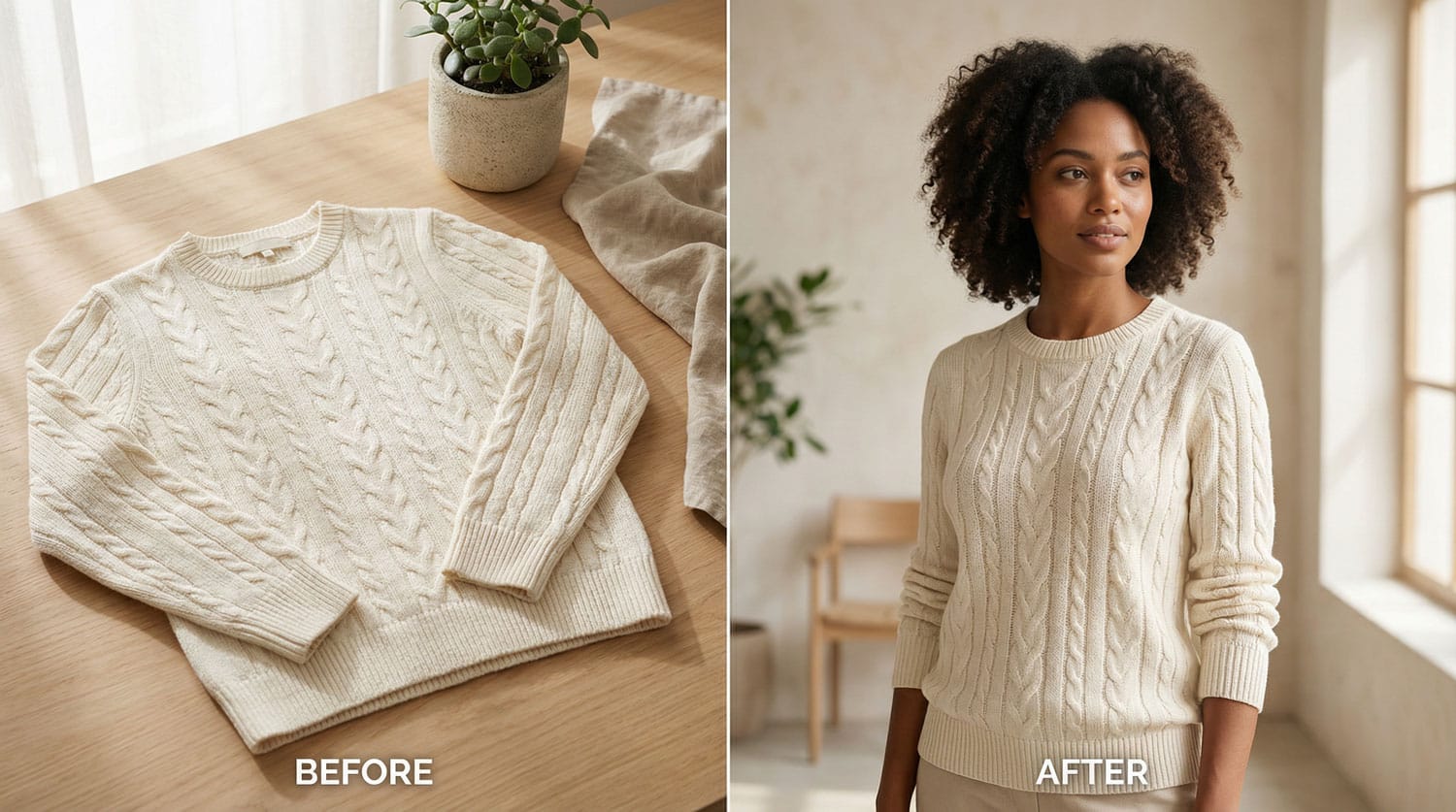
While economics drive initial adoption, AI fashion models deliver competitive advantages that transcend simple cost reduction.
- Unlimited Diversity Without Logistical Complexity
Traditional inclusive representation requires booking models across body types (petite, standard, plus-size, tall), ethnicities, ages, and abilities—each adding £200-£1,000 to project costs and weeks to timelines. Regional markets outside London, Manchester, and Birmingham face limited local model availability, forcing brands to choose between expensive travel logistics or limited representation.
AI fashion models eliminate these constraints entirely. Brands showcase collections across any demographic combination without additional costs or scheduling complexity. A Leicester-based modest fashion brand can demonstrate hijab styling across five body types and three age ranges for identical costs to a single traditional photoshoot.
This diversity enables targeted marketing at unprecedented granularity. Fashion brands can create region-specific imagery, demographic-targeted social media content, and personalised email campaigns showing products on models reflecting recipient characteristics—all from a single garment photography session.
- Consistent Brand Identity Unavailable Through Traditional Means
AI fashion models enable something traditional photography cannot easily replicate: perfect visual consistency across unlimited products. The same signature models appear throughout websites, social media, email campaigns, and marketplace listings with identical styling, lighting, and professional quality.
This consistency level traditionally required exclusive contracts with specific models and meticulous production coordination—investments accessible primarily to major fashion houses. AI democratizes this brand-building advantage, enabling small and medium brands to achieve the visual cohesion that signals professionalism and strengthens customer recognition.
Customers develop familiarity with brand faces, unconsciously associating these models with the fashion line’s identity. This manufactured brand personality increases engagement and builds loyalty through consistent visual storytelling.
- Rapid Response to Trends and Market Feedback
Fast-fashion markets operate on compressed cycles where trending styles emerge and fade within weeks. Traditional photography timelines—2-3 weeks minimum from concept to usable imagery—miss these windows entirely.
AI fashion models enable 48-72 hour turnarounds from garment photography to market-ready imagery. When social media identifies an emerging trend, brands can photograph samples, generate model imagery, and list products while competitors remain trapped in booking calendars.
This agility extends to market testing. Fashion brands can photograph new designs, generate imagery, and test customer response through limited social media campaigns before committing to inventory—all within days rather than months.
- Seasonal Catalogue Production at Scale
Established fashion brands face seasonal catalogue demands requiring hundreds of product images across multiple categories. Traditional photography for 100-item collections requires 5-10 separate photoshoots spanning weeks and costing £15,000-£50,000.
AI fashion models reduce this to a single concentrated photography session capturing all garments in identical conditions, followed by systematic AI generation across selected model types. A complete seasonal catalogue processes in 10-14 days at 70-85% cost reduction.
The quality consistency across such large catalogues proves impossible through traditional means. Variable lighting, model availability, and accumulated fatigue across multiple photoshoots inevitably produce uneven results. AI generation from uniform source photography creates perfectly consistent catalogues that appear professionally coordinated.
- Dynamic Content for Multi-Channel Marketing
Modern fashion marketing demands constant content refreshment across websites, social media platforms, email campaigns, and marketplace listings. Each channel favours different image formats, aspect ratios, and stylistic approaches.
Traditional photography locks brands into fixed image sets that require expensive reshoots for channel-specific variations. AI fashion models enable dynamic content generation—the same garment on the same consistent model can be regenerated with different backgrounds, poses, or styling for platform-specific optimization, all without additional photography.
A single photoshoot produces Instagram-optimised square crops, Facebook carousel formats, Pinterest vertical pins, and website hero images—each featuring consistent model identities but tailored for platform engagement patterns.
- Reduced Environmental Impact
Traditional fashion photography carries substantial environmental costs. Model travel to photoshoot locations, equipment transportation, studio energy consumption, and sample shipping accumulate carbon footprints disproportionate to output.
AI fashion models dramatically reduce these impacts. Products are photographed once in local studios, eliminating repetitive travel for location shoots or model commutes. The environmental comparison becomes particularly stark for brands requiring international model bookings or exotic location photography.
For fashion brands incorporating sustainability into brand positioning, reducing photography-related emissions provides genuine environmental progress with measurable carbon reductions—not greenwashing, but structural improvement in operational practices.
Addressing Common Concerns About AI Fashion Models
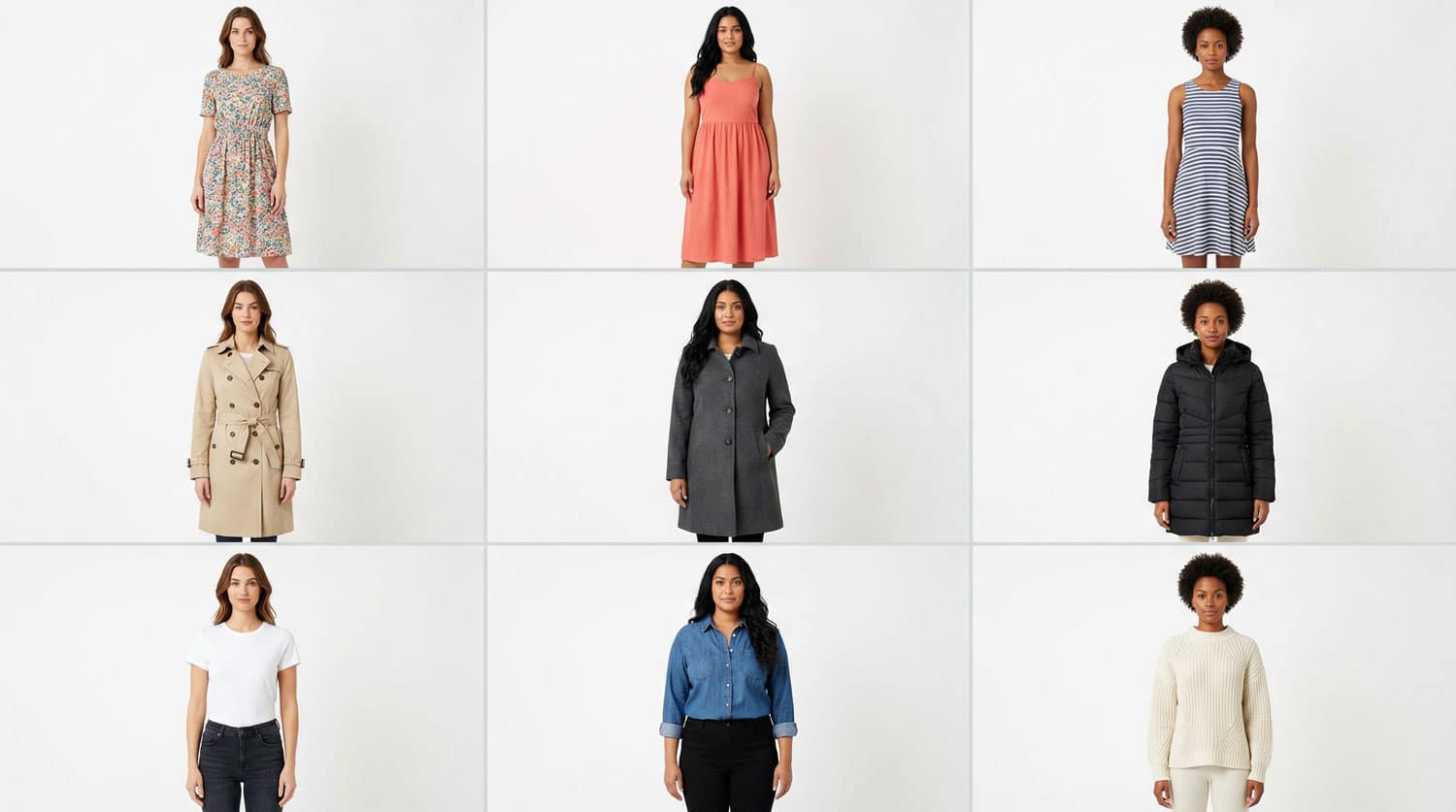 Despite clear advantages, fashion brands understandably raise questions about quality, authenticity, and market acceptance.
“Can AI Really Match Traditional Photography Quality?”
This concern stems from early AI generation tools that produced obviously synthetic results. Modern commercial AI fashion systems using professional source photography now create imagery indistinguishable from traditional photography for most e-commerce applications. The key lies in the photography foundation. Professional studio photography of garments, processed through commercial-grade AI with manual quality control, produces results matching or exceeding typical e-commerce photography standards. The technology excels particularly at consistent lighting, accurate colour representation, and fabric texture preservation—elements where traditional photography often falters across multiple sessions. For hero imagery, flagship campaigns, or editorial content requiring genuine human expression and spontaneity, traditional photography retains advantages. But for product display pages, catalogue imagery, and volume content production—representing 80-90% of fashion brand imagery needs—AI-generated models deliver equivalent or superior results.
“Will Customers React Negatively to AI Fashion Models?”
Market research reveals nuanced consumer attitudes. Customers care primarily about product visualization, not the photography method. When imagery accurately represents garments, enables informed purchase decisions, and maintains professional quality, the generation method remains largely invisible. Notably, major fashion retailers including H&M, Zara, and ASOS increasingly incorporate AI-generated imagery without customer backlash. The Business of Fashion reports that Etro grew e-commerce 46% after adopting AI-assisted photography, suggesting customers respond positively to improved visual consistency rather than negatively to AI usage. Transparency matters in specific contexts. When brands promote AI usage as innovation or sustainability initiatives, customers respond positively. When brands attempt to pass AI models as traditional photography through deceptive practices, negative reactions emerge. Honest positioning as professional imagery generation—not deception—builds trust.
“What About Model Livelihoods and Industry Ethics?”
This represents legitimate ethical consideration requiring thoughtful response. AI fashion models undoubtedly reduce demand for certain modelling work, particularly high-volume catalogue photography where repetitive poses predominate. However, several countervailing factors deserve recognition. First, AI technology democratizes fashion marketing, enabling small brands and emerging designers previously priced out of professional photography to compete effectively. This market expansion creates opportunities for creative talent in design, styling, and art direction. Second, the economics of fashion modelling have long favoured established models in major markets while providing inadequate compensation for volume work. AI primarily displaces the lowest-paid segments while increasing demand for specialized modelling—editorial work, flagship campaigns, and high-value creative projects where authentic human presence remains irreplaceable. Third, many models embrace AI as portfolio development tools, using AI-generated imagery to demonstrate versatility without extensive traditional photoshoot access. The technology serves as entry point rather than pure displacement. Fashion brands adopting AI responsibly balance efficiency gains with ethical considerations—maintaining traditional photography for flagship campaigns, supporting creative professionals through fair compensation, and positioning AI as complement to rather than replacement for human talent.
How UK Clothing Brands Work With Professional AI Model Services
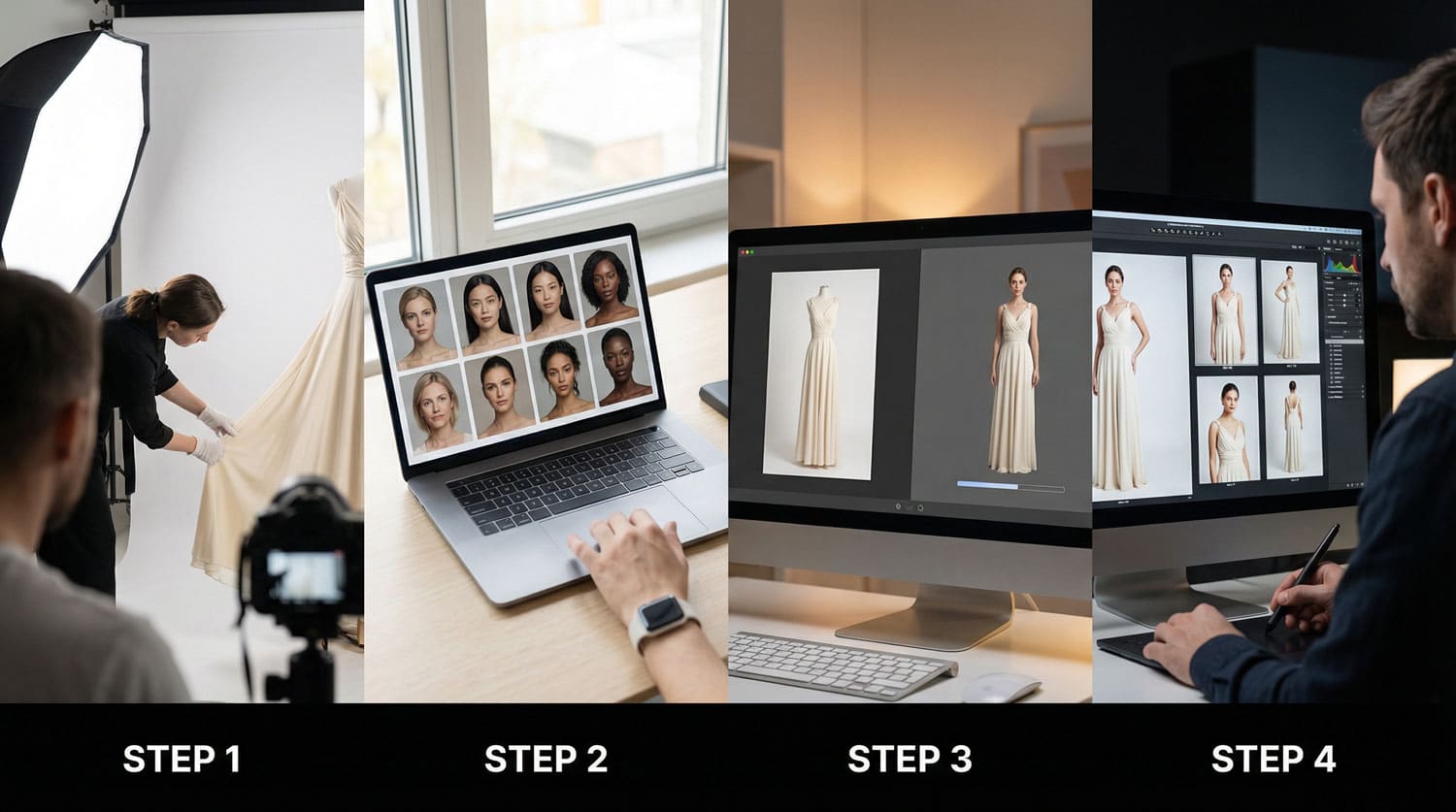 The practical process from garment to market-ready imagery involves distinct stages designed for quality and efficiency. Step 1: Garment Photography in Controlled Conditions Everything begins with professional product photography. Garments are photographed in studio conditions using proper lighting, appropriate backgrounds, and high-resolution cameras capturing fine details, accurate colours, and realistic fabric textures. This foundation determines final quality. Professional photographers ensure consistent lighting across all items, accurate colour representation critical for online sales, sharp focus highlighting fabric details and construction quality, and proper styling showcasing garments as customers will wear them. For UK fashion brands working with professional services, this typically means either shipping garments to the photography studio or scheduling on-location photography for brands with substantial collections. Step 2: Model Selection and Consistency Specification Brands select AI model types reflecting their target demographics and brand positioning. Professional services provide model libraries spanning body types, ethnicities, ages, and stylistic presentations—enabling brands to establish signature model identities that will appear consistently across their collections. This selection process considers brand positioning, target customer demographics, product categories, and desired brand personality. A sustainable casual wear brand might select naturally styled models with minimal makeup conveying approachable, authentic positioning. A luxury evening wear brand might choose polished, editorial-style models signalling sophistication. The critical advantage lies in consistency specification. Rather than accepting random model variations, brands define specific model identities used systematically across all products, creating cohesive visual storytelling. Step 3: AI Generation With Quality Control Professional services process garment photography through commercial AI systems, generating imagery with specified models in consistent poses, backgrounds, and lighting conditions. Unlike consumer DIY tools, commercial services include multi-layer quality control: Technical review ensures proper garment fit, realistic fabric drape, accurate colour representation, and lighting consistency. Photographer review verifies that generated images meet professional standards for composition, focus, and visual appeal. Brand alignment confirms imagery matches brand guidelines, positioning, and aesthetic expectations. This quality control stage separates professional services from automated DIY approaches. Manual review by experienced photographers identifies and corrects artifacts, refines details, and ensures commercial viability. Step 4: Delivery of Market-Ready Assets Final imagery is delivered in formats optimised for specific use cases: high-resolution files for hero imagery and print applications, web-optimised files balancing quality with loading speed, platform-specific formats for social media channels, and marketplace-compliant formats meeting Amazon, eBay, or Etsy requirements. Professional services provide full commercial usage rights without restrictions on platforms, duration, or applications—critical for brands building long-term visual assets.
When Traditional Photography Remains Superior
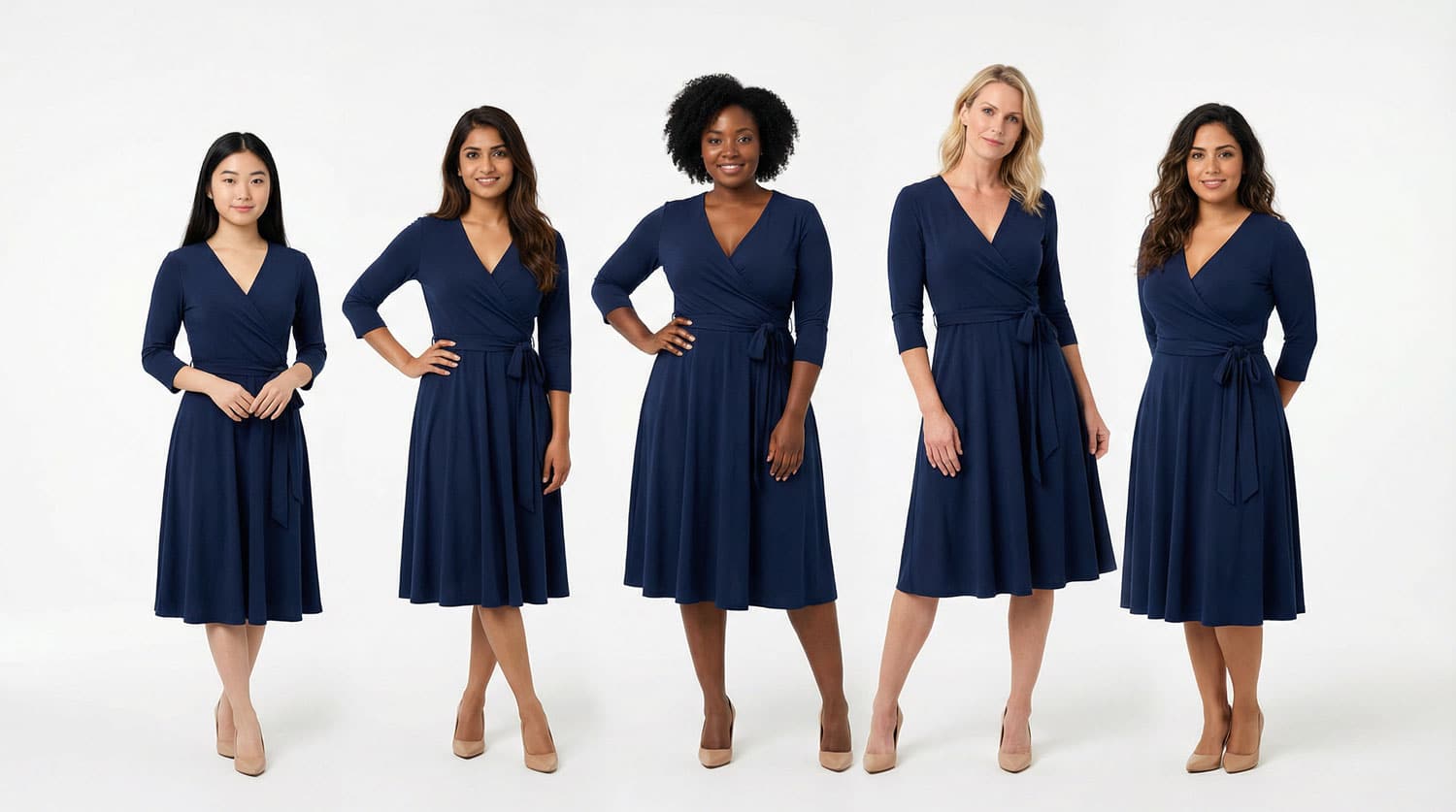 Despite substantial advantages, AI fashion models don’t replace traditional photography in all scenarios.
Editorial and Flagship Campaigns
High-impact editorial content, seasonal campaign launches, and flagship marketing initiatives benefit from traditional photography’s irreplaceable elements: genuine human expression conveying brand personality, spontaneous moments creating emotional connection, creative direction requiring real-time collaboration, and production value signalling premium positioning. Major fashion brands typically adopt hybrid approaches—AI generation for volume catalogue work, traditional photography for hero campaigns, editorial content, and brand storytelling requiring authentic human presence.
Complex Garment Interactions
Certain product categories present challenges for current AI systems. Intricate layered styling combining multiple garments, dynamic movement shots showing fabric in motion, and complex accessories requiring precise positioning on models benefit from traditional photography’s real-time adjustment capabilities. As AI technology advances, these limitations narrow, but brands with heavy emphasis on styling complexity or movement-focused content currently achieve better results through traditional approaches.
Video Content Production
While AI-generated video capabilities emerge, traditional videography remains superior for dynamic content showing garments in motion, lifestyle video demonstrating product use contexts, and brand storytelling requiring narrative depth. Fashion brands requiring video content typically photograph garments traditionally during video production sessions, then leverage those same professional images for AI fashion models—combining approaches rather than choosing exclusively.
Getting Started With AI Fashion Models UK: Practical Next Steps
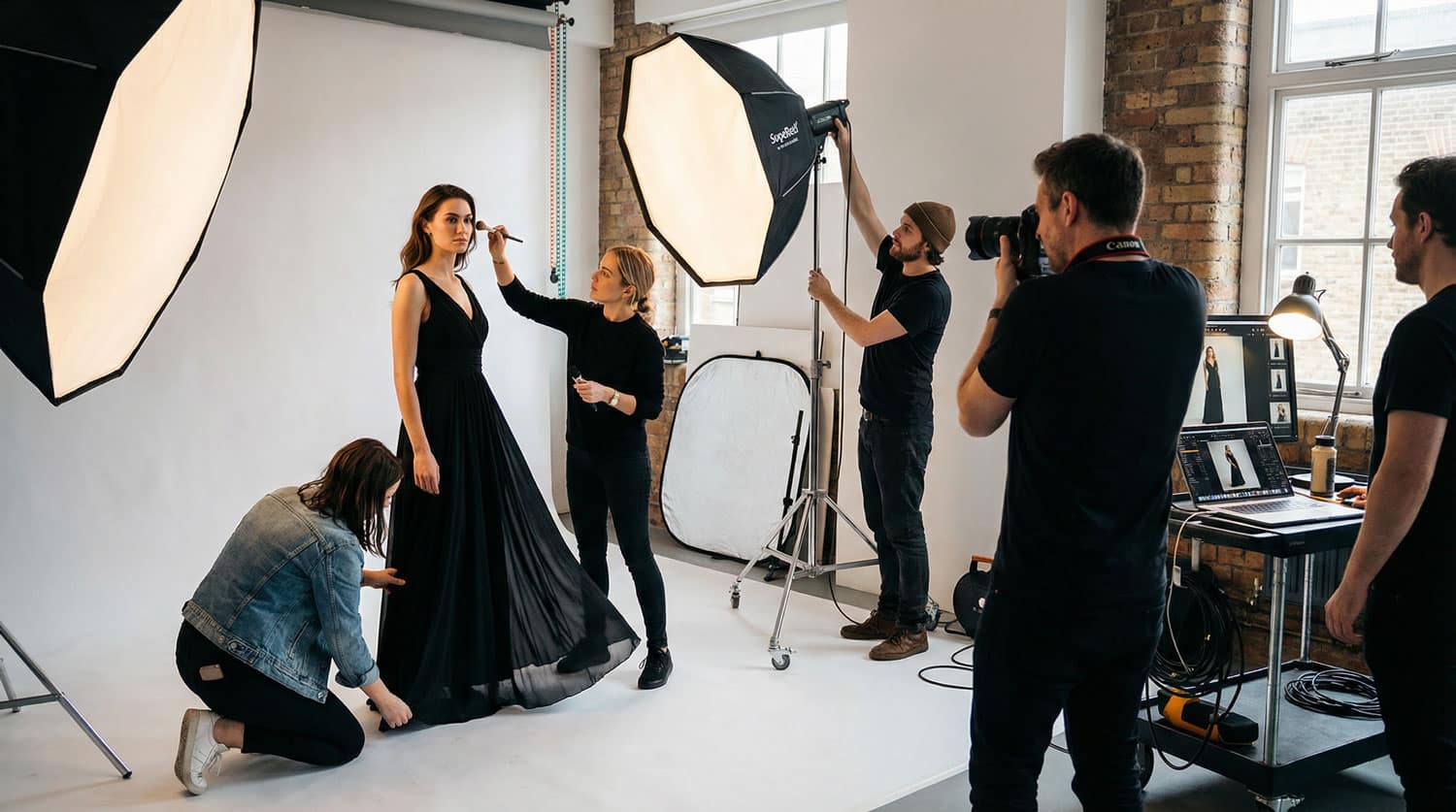 UK fashion brands considering AI fashion models should approach adoption systematically rather than wholesale replacement of existing photography.
Start With Catalogue Gap Filling
The lowest-risk entry point involves using AI to fill gaps in existing photography rather than replacing functional traditional imagery. Brands typically have product lines photographed inconsistently, seasonal items missing model shots, or catalogue gaps where photoshoots proved impractical. AI generation addresses these gaps, bringing visual consistency to existing catalogues without requiring comprehensive photography overhauls. This approach demonstrates value, builds confidence in quality, and establishes workflows before broader adoption.
Test With Non-Hero Products
Beginning with secondary product categories rather than flagship items reduces risk while building experience. Fashion brands might start with basics, core styles, or high-volume items where traditional photography already struggles with cost-effectiveness. Once processes prove successful with secondary products, expansion to broader catalogue applications follows naturally.
Establish Brand Guidelines for Model Consistency
Successful AI fashion model adoption requires defining brand visual standards: selecting 3-5 signature model identities representing brand positioning, specifying consistent styling approaches across product categories, establishing lighting and composition standards ensuring professional appearance, and creating clear guidelines for when traditional photography remains preferable. These guidelines ensure AI-generated imagery strengthens rather than dilutes brand identity.
The Future of Fashion Photography in UK E-Commerce
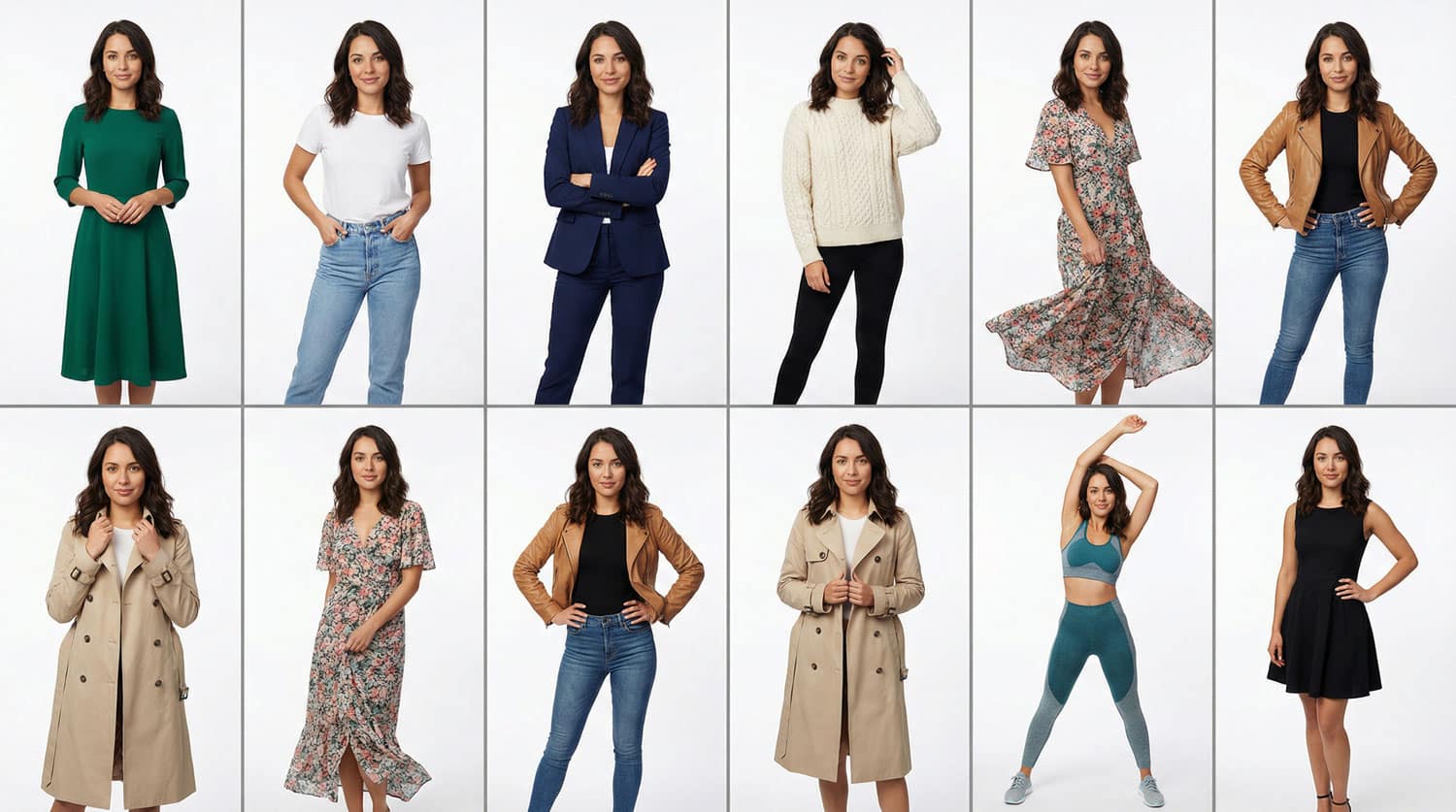 AI fashion models represent permanent shifts rather than temporary trends. Market projections indicate 80% of e-commerce fashion imagery will incorporate AI-generated elements by 2026, with fully AI-created content representing 40% of fashion visuals industry-wide. For UK fashion brands, the competitive landscape increasingly divides between those leveraging AI for cost efficiency, consistency, and agility, and those constrained by traditional photography limitations. As consumer expectations for diverse representation, frequent content updates, and consistent brand experiences intensify, AI adoption transitions from competitive advantage to competitive necessity. The technology continues advancing rapidly. Current AI systems already match traditional photography for most e-commerce applications. Next-generation systems will offer enhanced fabric physics simulation, improved movement and pose variation, and more sophisticated styling capabilities—further narrowing scenarios where traditional photography maintains clear superiority. Fashion brands adopting AI photography now build competitive advantages while the technology remains differentiating. Those waiting face playing catch-up as competitors establish efficient workflows, visual consistency, and cost structures traditional photography cannot match.
Conclusion

Conclusion: The Smart Approach to AI Fashion Models
AI fashion models UK brands are adopting represent a fundamental shift in how clothing businesses approach product imagery. The technology delivers measurable advantages—70-85% cost reductions, perfect consistency across collections, compressed production timelines, and unlimited diversity representation—that traditional photography simply cannot match at comparable economics. However, the smartest approach isn’t wholesale replacement of traditional photography, but strategic integration. Use AI for high-volume catalogue work, seasonal collection launches, and maintaining consistent brand identities across hundreds of products. Reserve traditional photography for flagship campaigns, editorial storytelling, and creative work requiring authentic human expression and spontaneity. The key to successful implementation lies in the photography foundation. Amateur smartphone photos processed through free DIY tools produce noticeably synthetic results. Professional studio photography of garments, combined with commercial-grade AI generation and experienced photographer quality control, creates imagery indistinguishable from traditional model photography for e-commerce applications. For UK fashion brands—whether emerging designers building their first collections, established retailers expanding product lines, or Amazon sellers competing on visual quality—AI fashion models democratize advantages previously available only to major fashion houses. Perfect visual consistency, diverse representation, and rapid production timelines no longer require prohibitive budgets or extensive model contracts. The competitive landscape is shifting rapidly. Brands leveraging AI photography today establish efficient workflows, build visual consistency, and optimise cost structures while competitors remain constrained by traditional photography limitations. As the technology continues advancing and consumer expectations for frequent content updates intensify, early adoption transforms from competitive advantage to competitive necessity. The question facing UK fashion brands isn’t whether AI will play a role in fashion photography’s future—market projections indicate 80% of e-commerce imagery will incorporate AI by 2026. The question is whether your brand will harness these advantages now, or spend the next two years watching competitors capture market share with professional imagery produced at fractions of your costs.
Ready to Transform Your Fashion Photography? Products Photography UK combines 15+ years of professional photography expertise with cutting-edge AI technology to deliver studio-quality fashion imagery without traditional photoshoot constraints or costs. What You Get:
- Professional garment photography in controlled studio conditions
- Consistent AI model generation across your target demographics
- 70-85% cost reduction compared to traditional model photography
- 7-14 day turnaround from garments to market-ready imagery
- Full commercial usage rights for all generated images
- Experienced photographer quality control ensuring professional standards
Our Process:
- Free consultation discussing your collection, brand positioning, and imagery needs
- Professional studio photography of your garments
- AI fashion models with your selected consistent model identities
- Manual quality control by experienced photographers
- Delivery of market-ready imagery optimised for your platforms
Based in the West Midlands and serving fashion brands across the UK, we specialize in helping clothing retailers, emerging designers, and Amazon fashion sellers create professional imagery that drives sales without breaking budgets. No hidden fees. No surprises. Just honest photography service that delivers results. Explore our AI-Enhanced Photography services →
FAQ

Frequently Asked Questions About AI Model Photography
How realistic are AI-generated fashion models compared to traditional photography? When starting with professional garment photography, AI-generated fashion models are indistinguishable from traditional model photography for e-commerce applications. The technology excels at realistic fabric drape, accurate lighting, and consistent quality—often surpassing traditional photography where variable conditions across multiple photoshoots create inconsistencies. For hero campaigns and editorial content requiring spontaneous human expression, traditional photography retains advantages, but for 80-90% of fashion brand imagery needs (product pages, catalogues, social media), AI generation delivers equivalent or superior results. Can I use the same AI models consistently across my entire collection? Yes, this represents one of AI fashion photography’s primary advantages. Unlike traditional photography requiring new model bookings for each photoshoot, AI enables you to establish 3-5 signature model identities used consistently across all products, categories, and seasons. This consistency builds brand recognition and creates visual cohesion impossible through traditional approaches without expensive exclusive model contracts. Professional services maintain your selected model identities, ensuring the same faces represent your brand across catalogues. How long does the process take from sending garments to receiving final images? The typical timeline is 7-14 days from garment receipt to final image delivery. This breaks down as: 1-2 days for professional studio photography of all garments, 2-4 days for AI model generation across specified model types, 2-3 days for quality control and manual review by photographers, and 1-2 days for revisions if needed. This represents 60-75% time reduction compared to traditional photography requiring 4-8 weeks when factoring in model booking, multiple photoshoots, and post-production. What about showing my clothing on different body types for size inclusivity? AI fashion models excel at inclusive representation precisely because they eliminate the logistical and financial constraints of booking diverse models. Professional services offer model libraries spanning body types (petite, standard, plus-size, tall), ethnicities, age ranges, and stylistic presentations. You can showcase your collection across five different body types for identical costs to traditional single-model photography. This democratizes inclusive marketing, enabling small brands to compete with major retailers in diverse representation without proportional budget increases. Do customers respond negatively to AI-generated model imagery? Market research and real-world adoption by major fashion retailers indicate customers care primarily about product visualization quality rather than generation method. When imagery accurately represents garments, maintains professional standards, and enables informed purchase decisions, the generation method remains largely invisible. Major brands including H&M and ASOS incorporate AI-generated imagery without customer backlash. Etro reported 46% e-commerce growth after adopting AI-assisted photography. The key lies in quality and honesty—maintaining professional standards and positioning AI as innovation rather than attempting deceptive practices. What file formats do I receive and where can I use them? You receive high-resolution files optimised for multiple use cases: JPG and PNG files compressed for website loading speed, high-resolution TIFF files for print catalogues or large-format marketing, platform-specific formats pre-sized for Instagram, Facebook, Pinterest, and TikTok, and marketplace-compliant formats meeting Amazon, eBay, or Etsy technical requirements. Professional services provide full commercial usage rights without restrictions on platforms, duration, modifications, or applications—the imagery becomes your permanent asset with no licensing limitations. How does AI fashion photography pricing compare to traditional photoshoots? Traditional model photography for 20 garments across 5 model types costs £7,500-£25,000 (£1,500-£5,000 per photoshoot × 5 shoots). AI fashion photography for identical output costs £1,500-£4,500 total—representing 70-85% cost reduction. Per-image costs drop from £75-£250 (traditional) to £15-£45 (AI). The savings compound for brands requiring frequent photography, large catalogues, or diverse representation. The economic advantage extends beyond direct costs—AI eliminates reshoots, reduces time investment, and accelerates market timing. Can AI handle complex fabrics like lace, sequins, or sheer materials? Current commercial AI systems excel at rendering most fabric types when working from professional source photography. Detailed textures like lace patterns, embroidery, and prints reproduce accurately because the AI preserves details from high-resolution studio photography. Reflective materials like sequins and metallic fabrics perform well with proper lighting in source photography. Sheer and translucent materials present greater challenges—while improving, these sometimes require traditional photography for hero imagery or additional manual refinement. Professional services include photographer review specifically to identify and address these complex material challenges. What happens if I’m not satisfied with the generated imagery? Professional AI fashion services include revision rounds within standard timelines. If generated imagery doesn’t meet expectations, the service refines outputs based on specific feedback—adjusting model poses, modifying backgrounds, correcting colour accuracy, or regenerating with alternative model selections. Unlike traditional photography where reshoots cost £1,500-£3,000 and require weeks, AI refinements process within 1-2 days at no additional cost. Services typically include 2-3 revision rounds ensuring final imagery meets your standards before delivery. Can I bring my own product photography or must you photograph the garments? Both approaches work depending on your source photography quality. If you have professional studio photography with controlled lighting, clean backgrounds, high resolution, and accurate colours, AI generation can work from your existing images. However, source photography quality directly determines final results—amateur smartphone photos produce noticeably inferior outputs. Most brands achieve better results sending garments for professional studio photography, ensuring the foundation supports commercial-quality AI generation. Professional services can evaluate your existing photography and advise whether it meets standards or requires re-shooting. How do I get started if I’m interested? The process begins with a free, no-obligation consultation where we discuss your specific products, photography needs, target marketplaces, brand aesthetic, and budget considerations. We’ll provide portfolio examples relevant to your industry, a transparent quote with no hidden fees, and honest assessment of whether AI-enhanced photography is the right solution for your specific situation. There’s no pressure to proceed—the consultation helps you make an informed decision. Book your consultation by visiting our AI-Enhanced Photography page or contacting us directly.
Why is it important for e-commerce businesses to invest in professional product photography?
Professional product photography is a smart move for e-commerce. It boosts the brand’s image, builds trust, and grows online sales. High-quality images give businesses an edge and bring in more customers. Let us help you step into the future of image creation.
Written by Dee Patel
Dee Patel is the founder of Products Photography UK, a West Midlands studio specialising in professional product photography and AI-enhanced imaging. With 16 years of commercial photography experience, Dee works with UK e-commerce brands, Amazon sellers, and B2B businesses across fashion, cosmetics, supplements, and more. Read Dee’s full profile →
Recent Comments